



Super Clone Watches Craftsmanship & Materials
This page explains the materials and craftsmanship standards used in the high-end replica watches offered on OUSWATCH.net, and shows how these standards can be verified through pre-shipment photos and videos. It is not intended to be a comprehensive encyclopedia of materials, but rather a seller’s standard guide and a practical tool to help you evaluate quality before purchase. For information regarding shipping, payment, and after-sales policies, please refer to the relevant pages.
What This Page Covers
Why we choose certain materials and finishing methods, and the real benefits for your wearing experience
How high-precision manufacturing (CNC) ensures case accuracy and fit
Surface finishing standards: PVD plating, polishing/brushing transitions, edge definition
Core materials: 904L steel, sapphire crystal, Swiss lume, ceramic/titanium/carbon
A judgment framework before buying: compare edges, reflections, alignment, texture consistency
For movement structure and performance, see the Movement Guide.
For how these details are documented before dispatch, see the Quality Inspection page.
For the full purchase journey, start with the Buying Guide.
Why Craftsmanship and Materials Matter for Your Decision
Whether a high-end Super Clone watch is worth buying depends on the material and finishing standards we apply, and the details you can verify from photos.
Material quality – affects weight, corrosion resistance, scratch resistance, long-term appearance
Finishing precision – affects reflections, edge sharpness, brushing uniformity, case and bracelet feel
We maintain specific standards for our higher-tier models. This page explains each standard, its benefits, and how you can independently verify it.
High-Precision Manufacturing – Why We Use CNC and How You Verify
CNC Machining – Standard for Our Higher-Tier Cases
What we use
All higher-tier cases, bezels, casebacks, and bracelet links we sell are CNC-machined to achieve consistent geometry, rather than cast or low-precision cut.
Benefits
Dimensions closely match the original design (lug spacing, bezel diameter, etc.)
Parts are designed to maintain even seams – the caseback-to-midcase fit should present a smooth transition
Flat surfaces provide an ideal base for polishing/brushing
Sharp edges are preserved, not rounded from casting defects
How you verify
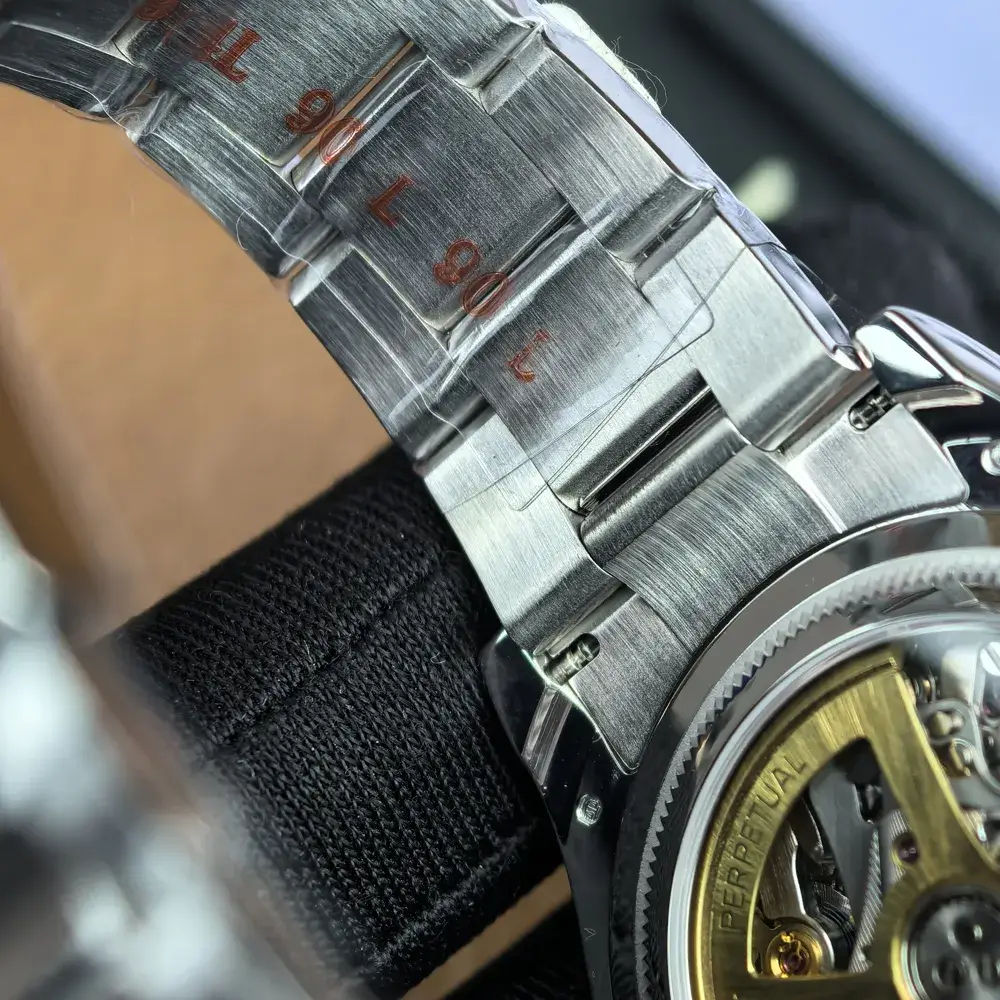
In pre-shipment photos, check:
Lug edges sharp and symmetrical
Case back to mid-case seam even, no misalignment
Crown operation smooth (visible in video)
End link to lug flush, no rattling
If you are unsure what to look for, the Quality Inspection page shows how we document these areas before shipping.
Surface Finishing – Our Standards and Your Verification
PVD Plating – Standard for Coated Cases
What we use
All gold or dark cases we sell use PVD (physical vapor deposition) vacuum ion plating, never wet electroplating.
Benefits
High hardness – scratch resistant in daily wear
Strong adhesion – no peeling or flaking
Color stable for years – no reddening or darkening
Thin, uniform coating – preserves case edges and engravings
How you verify
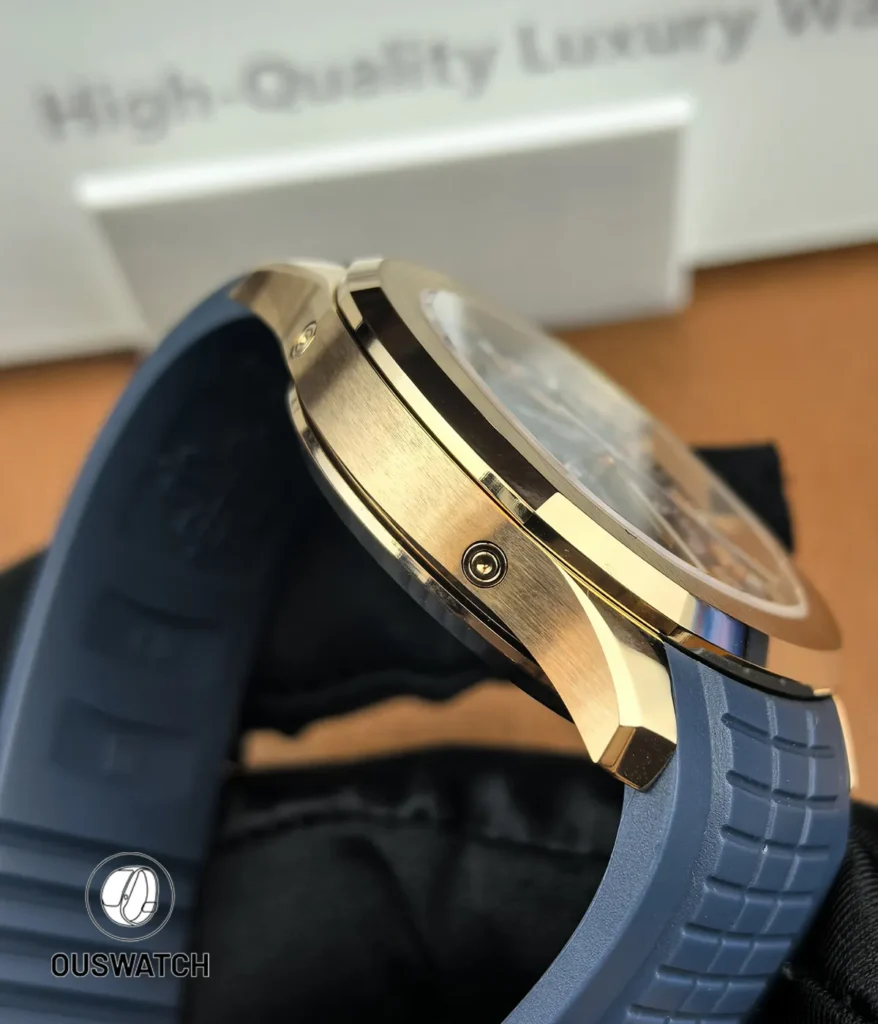
Check photos of case sides, lug corners, crown recesses: color even, no fading or missing coverage at edges
PVD wears more evenly than electroplating (which often shows edge wear first)
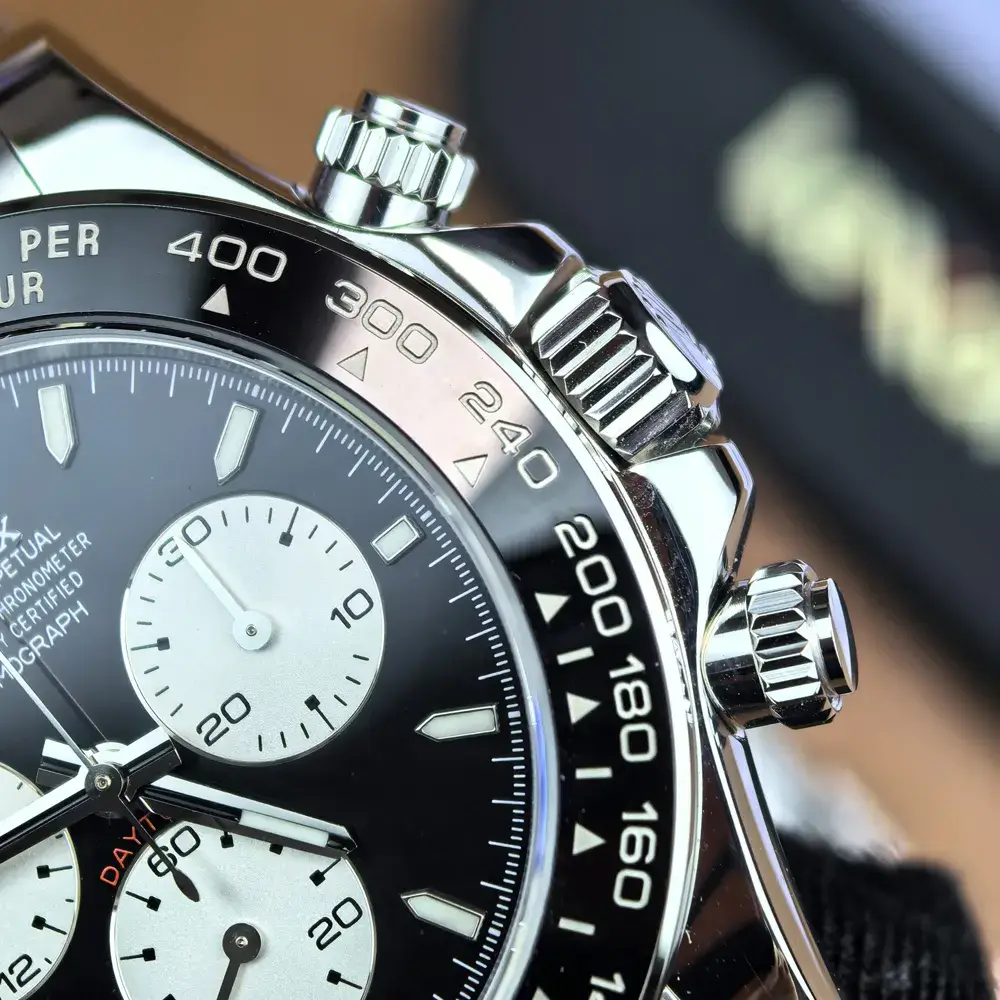
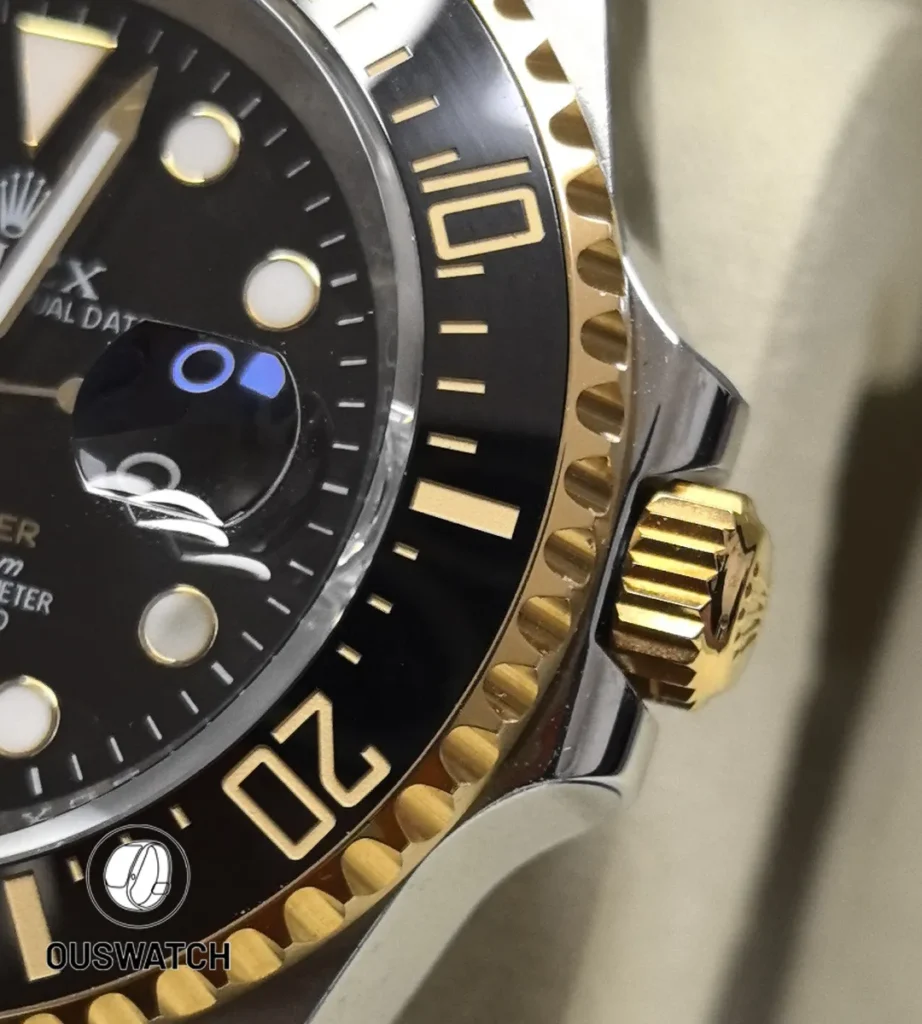
Request macro shots of bezel teeth and crown guards to inspect coating coverage
Caption: Side and lug corner detail of a gold case, showing color consistency and edge coverage.
Polishing and Brushing Transitions – Hallmark of Higher-Tier Versions
Our standard
We require crisp boundaries between polished and brushed surfaces – no blurring or rounding.
Benefits
Under light, polished areas create mirror reflections, brushed areas create linear diffuse reflections – sharp contrast, closer to genuine
Clean boundaries indicate careful finishing, not over-polishing or rough work
How you verify
Look at lug tops (usually brushed) vs. lug sides (usually polished): boundary sharp, not rounded
Check bezel to mid-case junction: brushing direction continuous, no random patterns
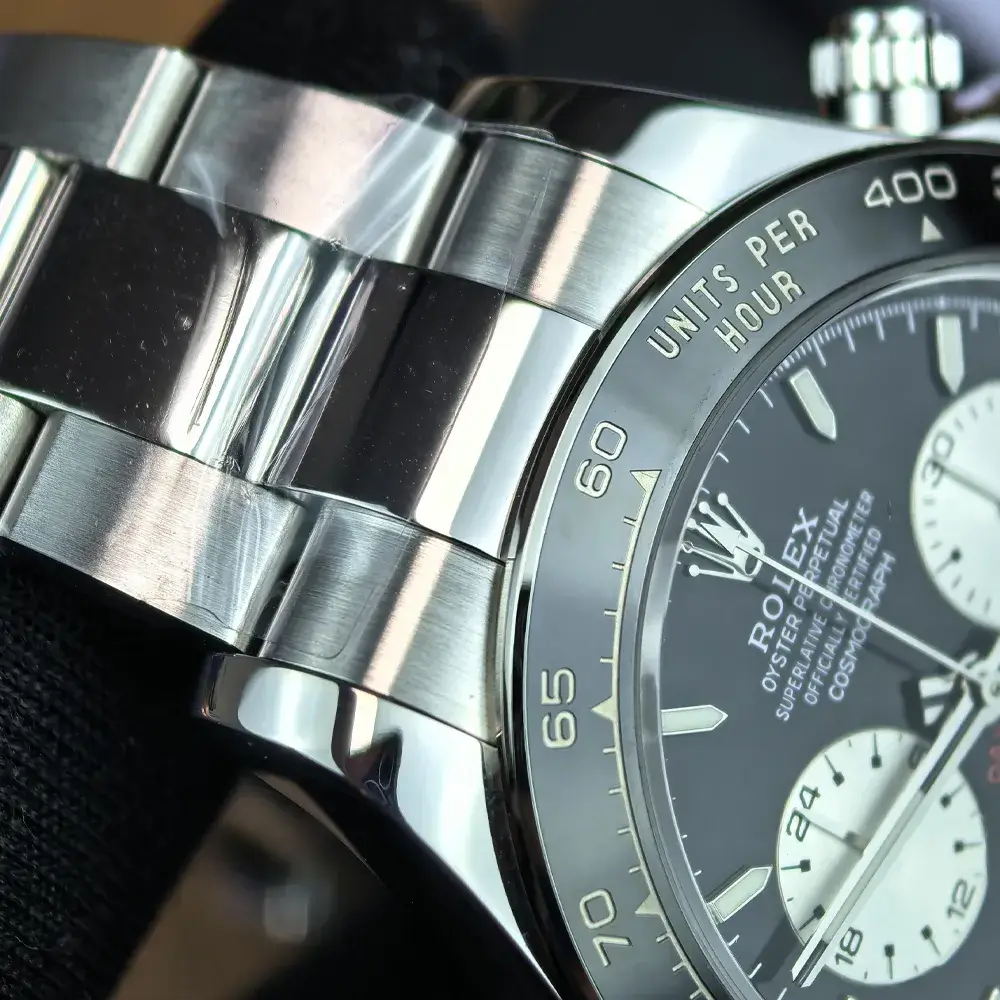
Inspect bracelet center links vs. edges: polished edges sharply separated from brushed surfaces
Macro shots in pre-shipment media best reveal these details
Caption: Lug top brushing and case side polishing boundary, showing a crisp transition.
Edges and Corners – Direct Evidence of Machining Quality
Our standard
Lug edges, bezel teeth, crown guards must retain crisp geometry – not rounded by over-polishing.
Benefits
Sharp edges reflect high-precision CNC machining – feel closer to genuine
A well-edged case shows clear highlight lines under light, more three-dimensional
How you verify
Run your finger (or examine photos) on lug tips: should be pointed, not rounded
Check bezel teeth (e.g., minute markers on ceramic bezel): each tooth’s edges sharp, no burrs
Inner surface of crown guards should be clean, no polishing residue
Core Materials – Our Selection Standards and How You Verify
The following materials are standard on our higher-tier models, along with their real benefits.
904L Stainless Steel – Preferred for Our Higher-Tier Steel Models
What we use
Our higher-tier steel models prioritize 904L grade stainless steel (Oystersteel equivalent), not common 316L.
Benefits
Higher corrosion resistance – resists sweat, seawater, chemicals – less pitting over time
Brighter, deeper polish – mirror finish closer to genuine
Slightly higher density – more solid feel
How you verify
Check product page material specification – 904L indicates our higher-tier standard
Material name alone is a reference; final judgment must include case polish brightness, bracelet edge finishing, end link fit, etc.
Note: 904L and 316L are visually indistinguishable, so rely on seller specification and overall finishing quality
Example: See our Rolex Super Clone category page, where higher-tier steel sports models commonly feature 904L steel and ceramic bezels.
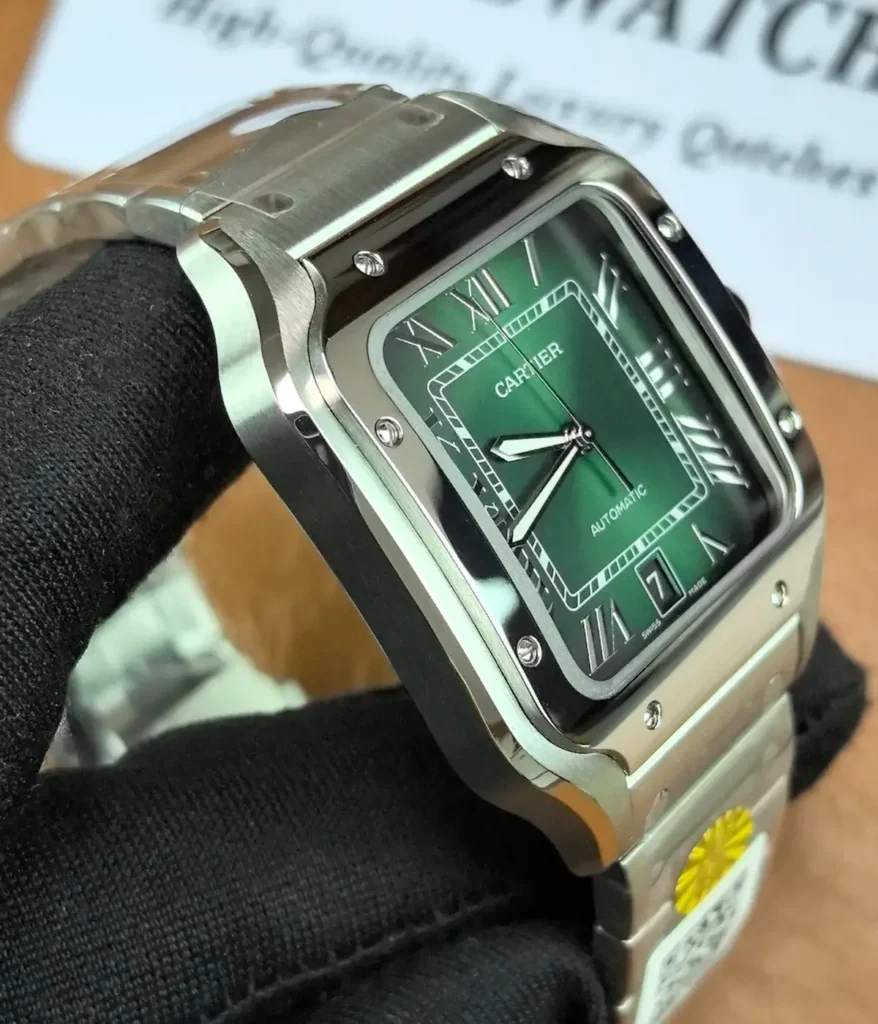
Sapphire Crystal with AR Coating – Standard on Our Higher-Tier Models
What we use
All our higher-tier models include sapphire crystal, with anti-reflective (AR) coating where appropriate.
Benefits
Extremely scratch-resistant (Mohs 9) – stays clear for years
Good AR coating greatly reduces reflections – legible even in bright light
Cyclops magnification (if present) should be 2.5x with minimal distortion
How you verify
Request a side-angle photo: good crystal is clear with no tint, no rainbow effect
Observe reflections: good AR coating produces soft reflections, no strong blue/green cast
Check date window: magnification appropriate, date digits sharp
Compare to mineral glass or poor sapphire (often has color cast or excessive reflections)
Swiss Super-LumiNova – Brightness and Color Match
What we use
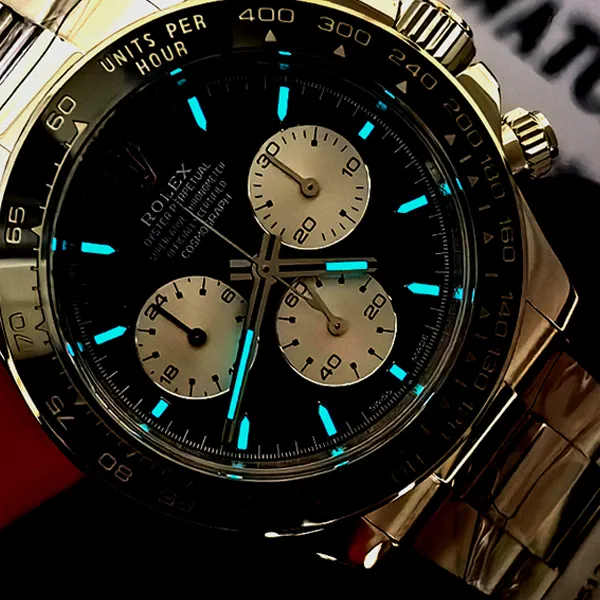
Our higher-tier models use Swiss Super-LumiNova (C1, C3, BGW9, or Chromalight-equivalent), not cheap luminous paint.
Benefits
High initial brightness – glows quickly after light exposure
Long afterglow – visible for hours in complete darkness
Accurate color – matches original blue or green lume
Even application – no dark spots or overflow
How you verify
Pre-shipment QC videos usually include a lume shot: check color match (blue or green, correct for model)
Inspect lume fill on hands, indices, bezel pip – even, no overflow or gaps
Brightness can be judged roughly from video exposure (compare to surrounding darkness)
Uniformity and color can be judged from photos – no need to wait until delivery
Model-Specific Materials (Ceramic, Titanium, Carbon)
What we use
Depending on the model:
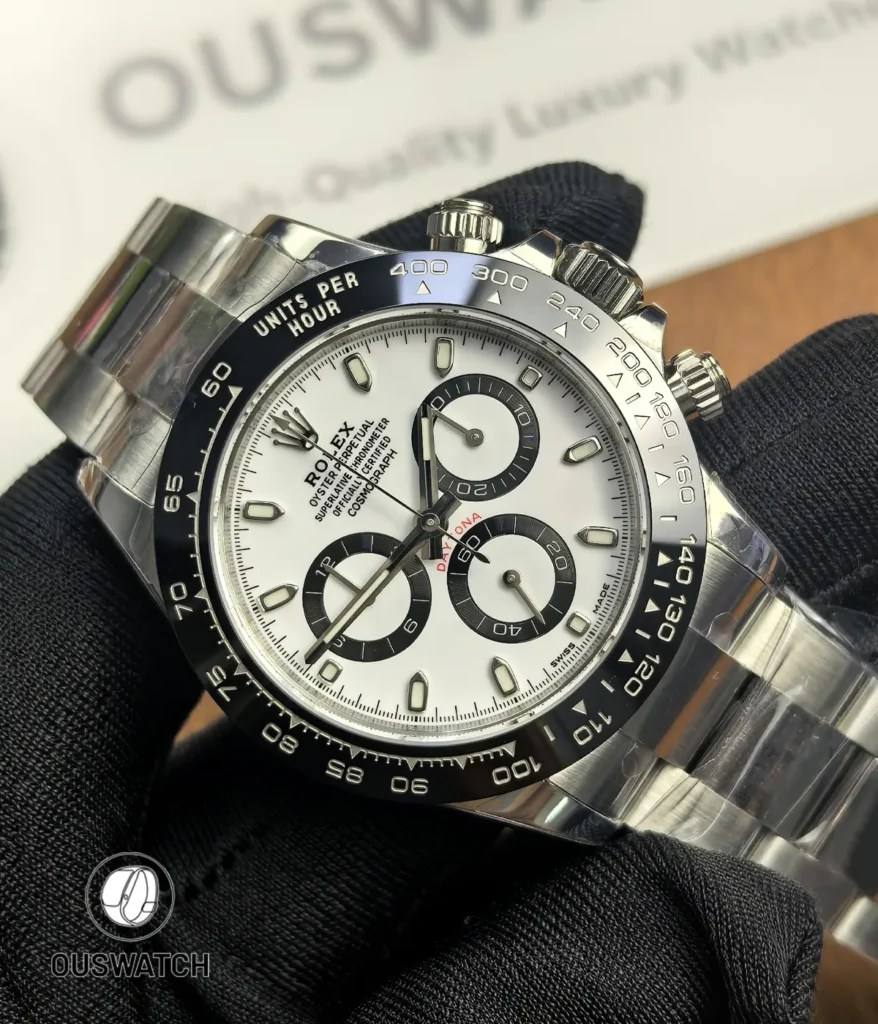
Ceramic bezels (e.g., Rolex Submariner, Daytona)
Titanium cases (e.g., certain Patek Philippe, Richard Mille replicas)
Carbon fiber / NTPT (e.g., Richard Mille)
Benefits
Ceramic: never fades, scratch-resistant, crisp engravings
Titanium: lightweight, hypoallergenic, matte finish
Carbon fiber: unique weave pattern, lightweight and strong
How you verify
Ceramic bezel: color uniform, engravings sharp, fill (usually platinum color) clean
Titanium: surface evenly matte, no tool marks
Carbon fiber: weave pattern continuous, no resin blobs or bubbles
Examples: Ceramic bezels on our Rolex Super Clone models; carbon fiber on our Richard Mille category page.
Practical Framework to Judge Craftsmanship Before Buying
Compare any watch using four dimensions:
Edges – sharp vs. rounded
Reflections – mirror vs. wavy/hazy
Alignment – indices, bezel, crown, end links
Texture consistency – brushing grain, lume fill, dial printing
Apply to specific areas. You can assess most of these points from pre-shipment photos and videos – the Quality Inspection page explains what media we provide.
Case and Bezel
Bezel rotation smooth, clicks crisp (if applicable)
Engraving depth and filling clean
Crown operation smooth
Dial, Indices, Hands
Dial text sharp, correctly positioned
Indices polished edges, aligned, no glue residue
Hands clean edges, lume matches indices
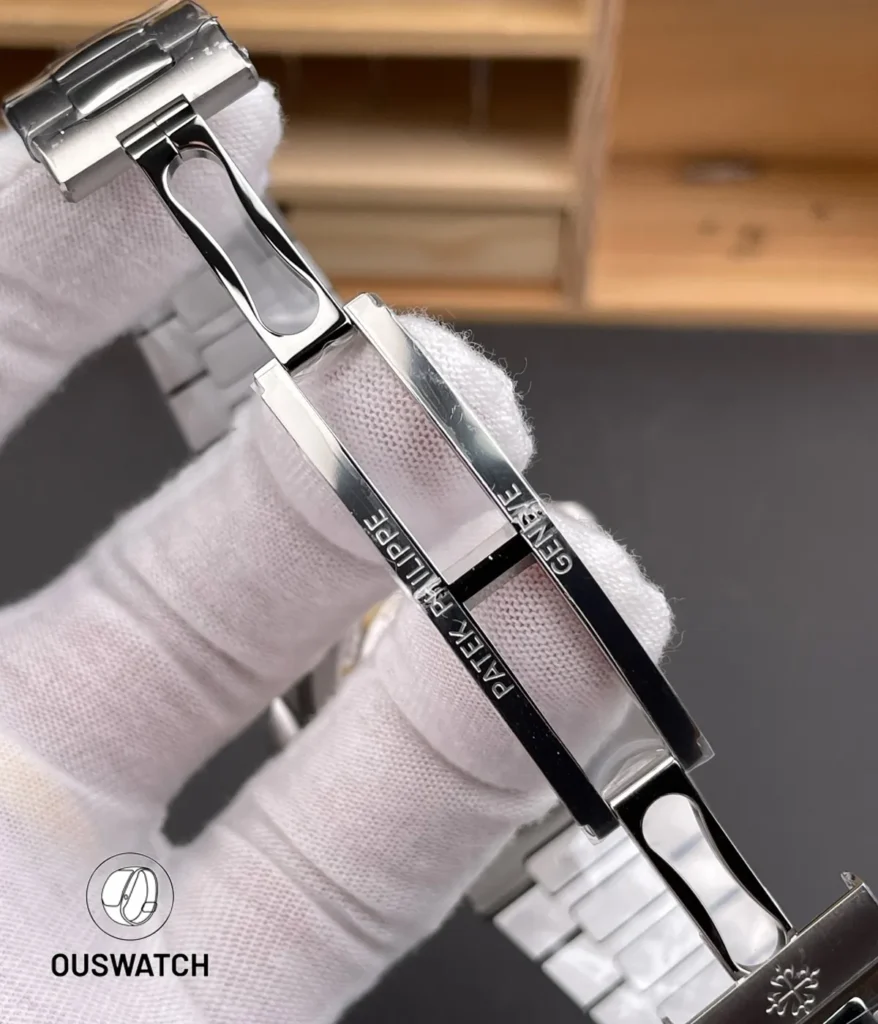
Bracelet, Clasp, Fit
Link articulation smooth
Clasp engraving deep and correctly placed
Clasp closes firmly, no vertical play
End link to lug gap minimal
Color Tone and Surface Consistency
Gold tone correct (not orange)
Steel polish mirror-like, no haze
Brushing direction consistent across the bracelet
When comparing two watches, the one with sharper lug edges and cleaner brushing transitions is almost always the better finished one.
How This Page Connects to the Buying Guide
This page is one of several supporting the Buying Guide:
Buying Guide – full purchase journey
Movement Guide – movement structure and performance
Quality Inspection page – how we document materials and finishing before shipping
Craftsmanship & Materials (this page) – our standards + your judgment methods
The above material and finishing standards are our core criteria when selecting higher-tier versions for the site. For after-sales, shipping, or payment, please see their respective pages.
Frequently Asked Questions
What materials do your higher-tier models actually use, and how can I confirm?
Our higher-tier models prioritize 904L steel, sapphire crystal with AR coating, Swiss Super-LumiNova, and model-specific materials like ceramic, titanium, carbon. Check product page specifications, and verify finishing details via pre-shipment photos/videos.
Which matters more – material names or finishing quality?
For buying decisions, finishing quality usually matters more than material names alone. A well-finished 316L watch can be a better buy than a poorly finished 904L one. Prioritize edge sharpness, brushing transitions, polishing uniformity, and lume consistency, then look at material grade.
How can I judge sapphire crystal quality from photos?
Ask for a side-angle photo. Good crystal is clear with no tint; good AR coating reduces reflections without a strong color cast. Rainbow effects or heavy blue tint indicate lower-grade coating.
What should I focus on when judging lume quality?
Three things: color match (blue or green, correct for the model); uniformity (no dark spots or overflow); brightness (should be strong in QC lume shots). Uniformity and color can be judged from photos.
Is 904L always better than 316L? How much does it affect my decision?
904L offers better corrosion resistance and polish brightness, but the visual difference in daily wear is subtle. When other craftsmanship is equal, 904L is a plus. But poor finishing cannot be saved by 904L alone. Prioritize finishing first, then material grade.
Does this page cover movements? Where can I see pre-shipment evidence?
No. See the Movement Guide for movements. For pre-shipment photos and videos, see the Quality Inspection page. For the full purchase path, return to the Buying Guide.